


**Introduction**
In today’s digital age of Data and Analytics, the amount of data generated is growing exponentially. This abundance of data holds immense potential for businesses and organizations to gain valuable insights and make informed decisions. Big Data and Analytics have emerged as crucial tools to harness this power of data. In this article, we will explore the concept of Big Data, the role of Analytics, applications, benefits, challenges, and future trends in this field.
**2. What is Big Data?**
Big Data refers to vast and complex datasets that cannot be easily managed or analyzed using traditional data processing methods. It encompasses three main dimensions: volume (large amount of data), velocity (high speed at which data is generated), and variety (diversity of data types). Big Data includes structured, semi-structured, and unstructured data from various sources such as social media, sensors, and enterprise systems.
**3. The Role of Analytics in Big Data**
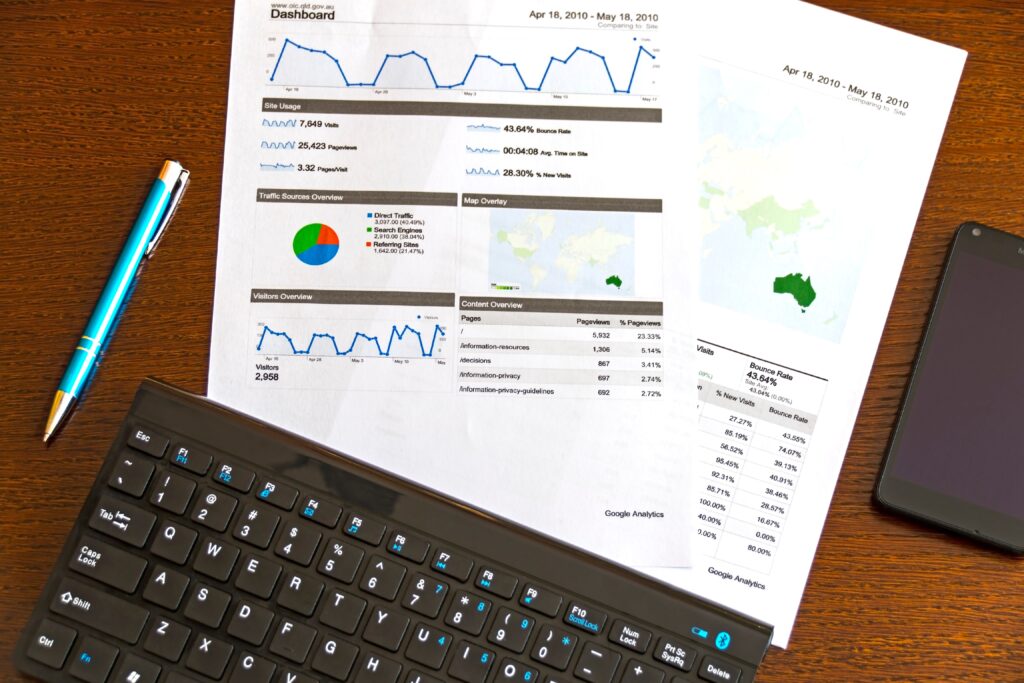
Analytics is the process of examining data to uncover patterns, extract insights, and make data-driven decisions. In the context of Big Data, Analytics plays a crucial role in transforming raw data into meaningful information. It involves techniques such as statistical analysis, data mining, machine learning, and predictive modeling. Analytics helps organizations derive actionable insights and gain a competitive edge by making sense of vast amounts of data.
**4. Applications of Big Data and Analytics**
Big Data and Analytics find applications in various domains, revolutionizing industries and improving operations. In healthcare, it enables personalized medicine, disease surveillance, and population health management. In retail, it facilitates targeted marketing, inventory optimization, and customer segmentation. Industries like finance, manufacturing, transportation, and energy leverage Big Data and Analytics for fraud detection, predictive maintenance, supply chain optimization, and smart grid management.
**5. Benefits of Big Data and Analytics**
The adoption of Big Data and Analytics offers several benefits. It enables organizations to make data-driven decisions, leading to improved operational efficiency, cost reduction, and increased revenue. It facilitates better customer understanding, enhanced personalization, and targeted marketing strategies. Big Data and Analytics also drive innovation, support product development, and enable organizations to stay ahead of the competition in today’s data-driven marketplace.
**6. Challenges in Big Data and Analytics**
While Big Data and Analytics offer significant advantages, they also pose challenges that need to be addressed. The volume, velocity, and variety of data require scalable infrastructure and advanced data management techniques. Privacy and security concerns arise due to the sensitive nature of data. Extracting meaningful insights from complex datasets requires skilled data scientists and analysts. Additionally, ensuring data quality, maintaining data governance, and addressing ethical considerations are key challenges in this field.
**7. Future Trends in Big Data and Analytics**
The future of Big Data and Analytics is promising, with several trends shaping the field. The integration of Artificial Intelligence (AI) and Machine Learning (ML) techniques with Big Data Analytics will enhance the capabilities of predictive modeling and automated decision-making. Edge Analytics, which processes data closer to its source, will become more prevalent for real-time insights. The adoption of Cloud Computing and the Internet of Things (IoT) will further drive the growth and accessibility of Big Data and Analytics.
1. What is Big Data, and why is it important for businesses?
– Answer: Big Data refers to large and complex datasets that organizations can analyze to gain insights and make informed decisions. (Source: Forbes)
2. How does Analytics contribute to extracting value from Big Data?
– Answer: Analytics involves the use of statistical techniques and algorithms to analyze Big Data and uncover meaningful insights. (Source: McKinsey & Company)
3. What are the key applications of Big Data and Analytics in healthcare?
– Answer: Big Data and Analytics are used in healthcare for personalized medicine, disease prediction, and population health management. (Source: HealthITAnalytics)
4. How can retail businesses benefit from Big Data and Analytics?
– Answer: Retailers can leverage Big Data and Analytics for targeted marketing, inventory optimization, and customer behavior analysis. (Source: Deloitte)
5. What challenges are associated with managing and analyzing Big Data?
– Answer: Challenges include data storage, data quality, privacy concerns, and the need for skilled data professionals. (Source: Gartner)
6. How can Big Data and Analytics improve operational efficiency in manufacturing?
– Answer: By analyzing production data, manufacturers can identify bottlenecks, optimize processes, and reduce downtime. (Source: IBM)
7. What role does predictive analytics play in Big Data?
– Answer: Predictive analytics uses historical data patterns to make future predictions and enable proactive decision-making. (Source: SAS)
8. How can Big Data and Analytics help in financial fraud detection?
– Answer: By analyzing large volumes of transactional data, anomalies and patterns indicative of fraud can be identified. (Source: KPMG)
9. What are the benefits of using Big Data and Analytics in the energy sector?
– Answer: Big Data and Analytics enable energy companies to optimize resource usage, predict maintenance needs, and improve grid efficiency. (Source: Forbes)
10. How is Artificial Intelligence (AI) influencing Big Data and Analytics?
– Answer: AI techniques enhance data processing, automate insights generation, and enable more accurate predictions from Big Data. (Source: Harvard Business Review)
**Conclusion**
Big Data and Analytics have transformed the way organizations derive insights and make decisions. The ability to effectively manage and analyze large and diverse datasets has become a strategic advantage in today
‘s data-centric world. By harnessing the power of Big Data and leveraging advanced Analytics techniques, businesses can unlock valuable insights, optimize operations, and stay ahead in their respective industries.
**Regards**
Team @ SarkariKhabrein