

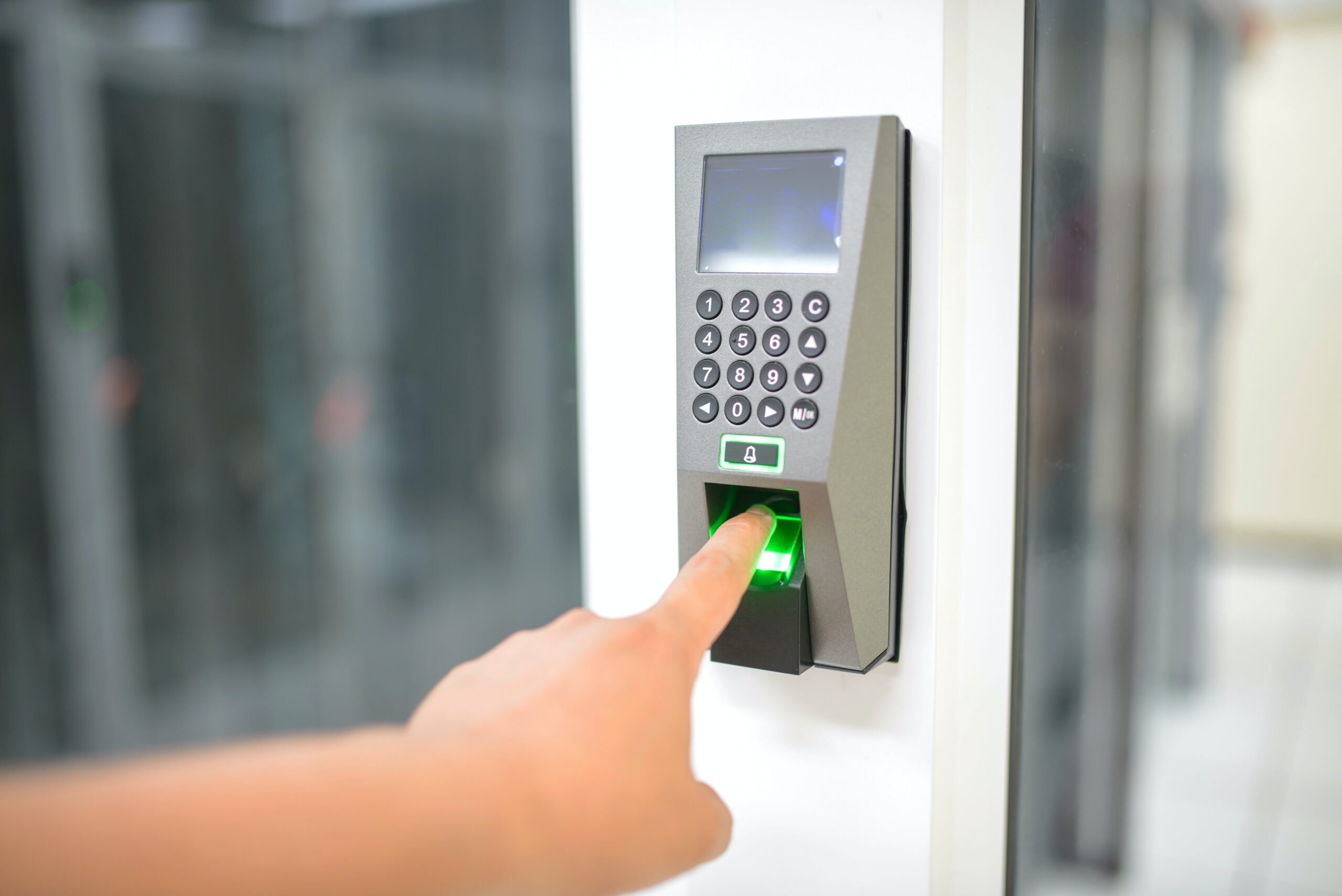
**Introduction**
In an increasingly digital world, ensuring secure and accurate authentication and identity verification (Biometric technology) is crucial. Traditional methods such as passwords and PINs are susceptible to vulnerabilities. Biometric technology has emerged as a game-changer, revolutionizing the way we establish and confirm identities. In this article, we will explore the concept of biometric technology, its role in authentication, applications, benefits, security considerations, challenges, and future trends.

**2. Understanding Biometric Technology**
Biometric technology uses unique physical or behavioral characteristics to identify and authenticate individuals. These characteristics include fingerprints, facial features, iris patterns, voiceprints, and even DNA. Biometric systems capture and analyze these traits to establish a person’s identity accurately.
**3. The Role of Biometrics in Authentication**
Biometrics provides a highly secure and convenient method of authentication. Instead of relying on something the user knows (passwords) or possesses (ID cards), biometric authentication utilizes what the user inherently is. By comparing live biometric data with stored templates, systems can verify and grant access only to authorized individuals.
**4. Applications of Biometric Technology**
Biometric technology finds applications in various sectors, including government, finance, healthcare, travel, and more. It enables secure access control to buildings and restricted areas, facilitates border control and immigration processes, enhances mobile device security, and enables secure transactions in banking and e-commerce.
**5. Benefits of Biometric Authentication**
Biometric authentication offers several advantages. It provides a higher level of security, as biometric traits are unique to individuals and difficult to forge. It eliminates the need for passwords, reducing the risk of password-related breaches. Biometric authentication is also convenient, as users do not need to remember complex passwords or carry multiple identification cards.
1. What is biometric technology and how does it work?
– Answer: Biometric technology uses unique physical or behavioral traits to authenticate individuals. (Source: TechRadar)
2. What are the common types of biometric traits used for authentication?
– Answer: Common biometric traits include fingerprints, facial features, iris patterns, and voiceprints. (Source: Biometric Update)
3. How does biometric authentication provide stronger security compared to traditional methods?
– Answer: Biometric authentication relies on unique individual traits, making it difficult to forge or replicate. (Source: Forbes)
4. What are the main applications of biometric technology in the financial sector?
– Answer: Biometric technology enhances security in banking by enabling secure access to accounts and authorizing transactions. (Source: Finextra)
5. Can biometric systems handle large-scale deployments in public places?
– Answer: Yes, biometric systems have been successfully deployed in airports, stadiums, and other public areas for identity verification. (Source: Biometric Technology Today)
6. How does biometric authentication improve user convenience?
– Answer: Biometric authentication eliminates the need for passwords or PINs, providing a more convenient and seamless user experience. (Source: Security Magazine)
7. Are there any privacy concerns associated with biometric technology?
– Answer: Biometric systems prioritize user privacy by encrypting and protecting biometric data from unauthorized access. (Source: Biometric Technology Today)
8. Can biometric systems be fooled by replicas or fake biometric traits?
– Answer: Advanced biometric systems incorporate anti-spoofing techniques to detect fake biometric traits and prevent unauthorized access. (Source: Biometric Update)
9. What are the challenges of implementing biometric technology in government systems?
– Answer: Challenges include interoperability, data standardization, and ensuring compliance with privacy regulations. (Source: Government Technology)
10. What are the future trends in biometric technology?
– Answer: Future trends include the use of biometrics in wearables, continuous authentication, and the integration of biometrics with other technologies like AI and IoT. (Source: Biometric Technology Today)
**6. Enhancing Security and Privacy**
Biometric systems prioritize user privacy and security. Biometric data is typically stored in encrypted form and cannot be reverse-engineered to reveal the original biometric traits. Moreover, unlike passwords or ID cards, biometric traits cannot be easily lost, stolen, or forgotten.
**7. Challenges and Considerations**
Despite the benefits, there are challenges associated with biometric technology. Biometric systems may encounter false acceptance or false rejection errors, requiring continuous improvement. Privacy concerns arise due to the sensitive nature of biometric data. Additionally, ensuring interoperability, standardization, and addressing ethical and legal implications are important considerations in deploying biometric systems.
**8. Future Trends in Biometric Technology**
The future of biometric technology is promising, with several trends shaping its development. Mobile biometrics, such as fingerprint and facial recognition on smartphones, will continue to expand. Multi-modal biometrics, combining multiple traits for enhanced accuracy, will gain prominence. Advancements in AI and machine learning will further improve biometric algorithms, ensuring better performance and faster processing.
**Conclusion**
Biometric technology has transformed the way we authenticate and verify identities. With its strong security, convenience, and widespread applications, it offers a promising solution for various sectors. However, careful implementation, addressing challenges, and ensuring user privacy are crucial for its continued success.
Helpful information. Fortunate me I discovered your website by accident, and I am stunned why this accident didn’t came about earlier! I bookmarked it.
Thank you for your appreciation
Hope you give your valuable comments in future also, which can help us to improve and serve better interms of knowledge, awareness, news etc.
Regards Team – sarkarikhabrein.in
One thing I’d prefer to say is the fact before purchasing more computer memory, have a look at the machine into which it is installed. In case the machine is definitely running Windows XP, for instance, the particular memory threshold is 3.25GB. Using over this would purely constitute a new waste. Make sure one’s mother board can handle an upgrade quantity, as well. Interesting blog post.
Interesting ad-on to the info provided
Regards Team – sarkarikhabrein.in
I抣l right away seize your rss as I can’t to find your email subscription link or e-newsletter service. Do you’ve any? Kindly let me understand in order that I may subscribe. Thanks.