

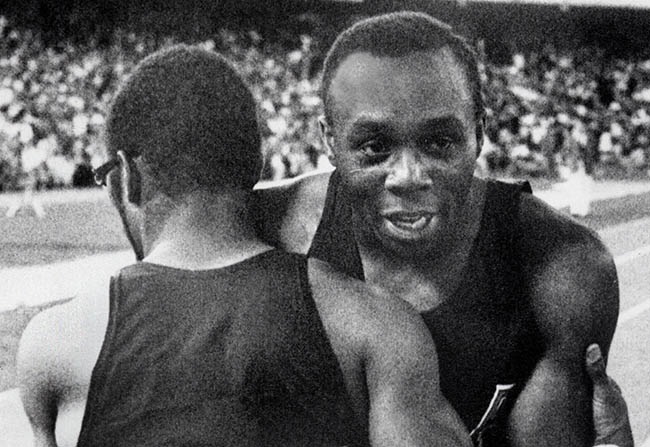
Jim Hines, the legendary US sprinter who etched his name in the annals of track and field history as the first man to break the 10-second barrier in the 100-meter dash, has sadly passed away at the age of 76, as announced by World Athletics on Monday. Hines’ groundbreaking achievement occurred at the 1968 US Championships held in Sacramento, where he crossed the finish line in a hand-timed 9.9 seconds, forever altering the perception of human speed and potential.
Later that same remarkable year, Hines solidified his status as an athletics icon by clinching the gold medal in the 100-meter event at the Mexico City Olympics. Competing at high altitude, Hines not only triumphed over his opponents but also set a new world record with an electronic timing of 9.95 seconds. This extraordinary feat was made even more impressive by the fact that Hines’ record remained unbroken for a staggering 15 years, standing as the longest-standing men’s 100-meter world record in the era of fully automatic timing. It was finally surpassed in 1983 by another American sprinter, Calvin Smith, who clocked an astonishing time of 9.93 seconds, also at altitude.
Born in Dumas, Arkansas, in September 1946, Jim Hines was raised in Oakland, California, where his passion for sports began to take shape. Initially drawn to baseball, it was his innate talent for sprinting that captured the attention of athletics coach Jim Coleman. Recognizing Hines’ immense potential, Coleman guided and nurtured his abilities, leading to remarkable accomplishments on the track. By the age of 17, Hines had already emerged as one of the top 20 sprinters in the world over 100 yards. This early success paved the way for his collegiate journey at Texas Southern University, where he pursued his education while honing his skills as a sprinter.
Hines’ rise to prominence continued, and in 1965, he left an indelible mark on the national stage with a podium finish at the US Championships, securing second place in the highly competitive 200-meter event. However, it was at the 1968 Olympics in Mexico City that Hines reached the pinnacle of his career. With the eyes of the world upon him, he unleashed a burst of lightning-fast speed, leaving his competitors, Lennox Miller of Jamaica and Charles Greene, trailing in his wake. Hines’ triumphant victory not only earned him the coveted gold medal but also shattered the existing world record, firmly establishing him as a true trailblazer in the realm of sprinting.
Beyond his remarkable athletic achievements, Hines’ legacy extends to his enduring impact on future generations of athletes. By transcending the boundaries of what was deemed physically possible, he inspired countless individuals to dream big and push their limits. Hines’ relentless pursuit of greatness and his ability to shatter records served as a catalyst for the evolution of sprinting, prompting athletes worldwide to strive for faster times and greater feats.
FAQ:
Q: What was Jim Hines’ most significant achievement in athletics?
A: Jim Hines’ most significant achievement was being the first person to break the 10-second barrier in the 100-meter dash. He accomplished this feat at the 1968 US Championships with a hand-timed 9.9 seconds.
Q: How did Jim Hines contribute to the sport of athletics?
A: Jim Hines revolutionized the sport of athletics by showcasing the untapped potential of human speed. His groundbreaking achievement of running the 100-meter dash in under 10 seconds set a new standard and inspired generations of sprinters to push the limits of their capabilities.
Q: How long did Jim Hines’ world record stand?
A: Jim Hines’ world record in the 100-meter dash stood for 15 years, making it the longest-standing men’s 100-meter world record in the fully automatic timing era. It was eventually broken in 1983 by Calvin Smith.
Q: What was Jim Hines’ background in athletics?
A: Jim Hines displayed immense talent in athletics from an early age. Initially interested in baseball, he caught the attention of athletics coach Jim Coleman, who recognized his sprinting potential. Hines’ dedication and hard work led him to become one of the top sprinters in the world, ultimately setting new records and becoming an Olympic champion.
Q: How did Jim Hines inspire future generations of athletes?
A: Jim Hines’ extraordinary accomplishments and ability to transcend the limits of human speed inspired future generations of athletes. His achievements served as a constant reminder that with dedication, perseverance, and the courage to challenge boundaries, one can achieve greatness in any field.
We extend our deepest condolences to the family, friends, and admirers of Jim Hines during this difficult time. His contributions to the world of athletics will forever be cherished, and his legacy will continue to inspire generations to come.
Warm regards,
SarkariKhabrein.in